
Introduction
When buying a used vehicle in the UAE, the specifications matter more than many buyers realise. Cars built for different regions are specially designed to handle different climates, road conditions, and driving habits. That is why understanding Japanese and GCC Specs in Cars can help you make a smarter long-term decision.
In the UAE used car market, Japanese vs GCC Specs Cars vehicles are both widely available. Japanese imports often attract buyers because of pricing and model variety, while GCC vehicles are built with Gulf conditions in mind. Before making a purchase, it is worth understanding how each performs in UAE heat, dust, and everyday driving conditions.
What Are GCC Specifications?
GCC specifications refer to vehicle standards created for countries within the Gulf Cooperation Council, including the UAE, Saudi Arabia, Kuwait, Bahrain, Oman, and Qatar.
Manufacturers develop GCC-spec vehicles specifically to perform efficiently in Gulf environments.
Common features of GCC-spec vehicles include:
- Cooling systems designed for high temperatures
- Heavy-duty air conditioning performance
- Improved dust and sand protection
- Stronger anti-rust treatment for humid coastal areas
- Components built for long-distance and high-temperature driving
These features make GCC vehicles well suited to UAE roads and climate conditions.
What Are Japanese Specifications?
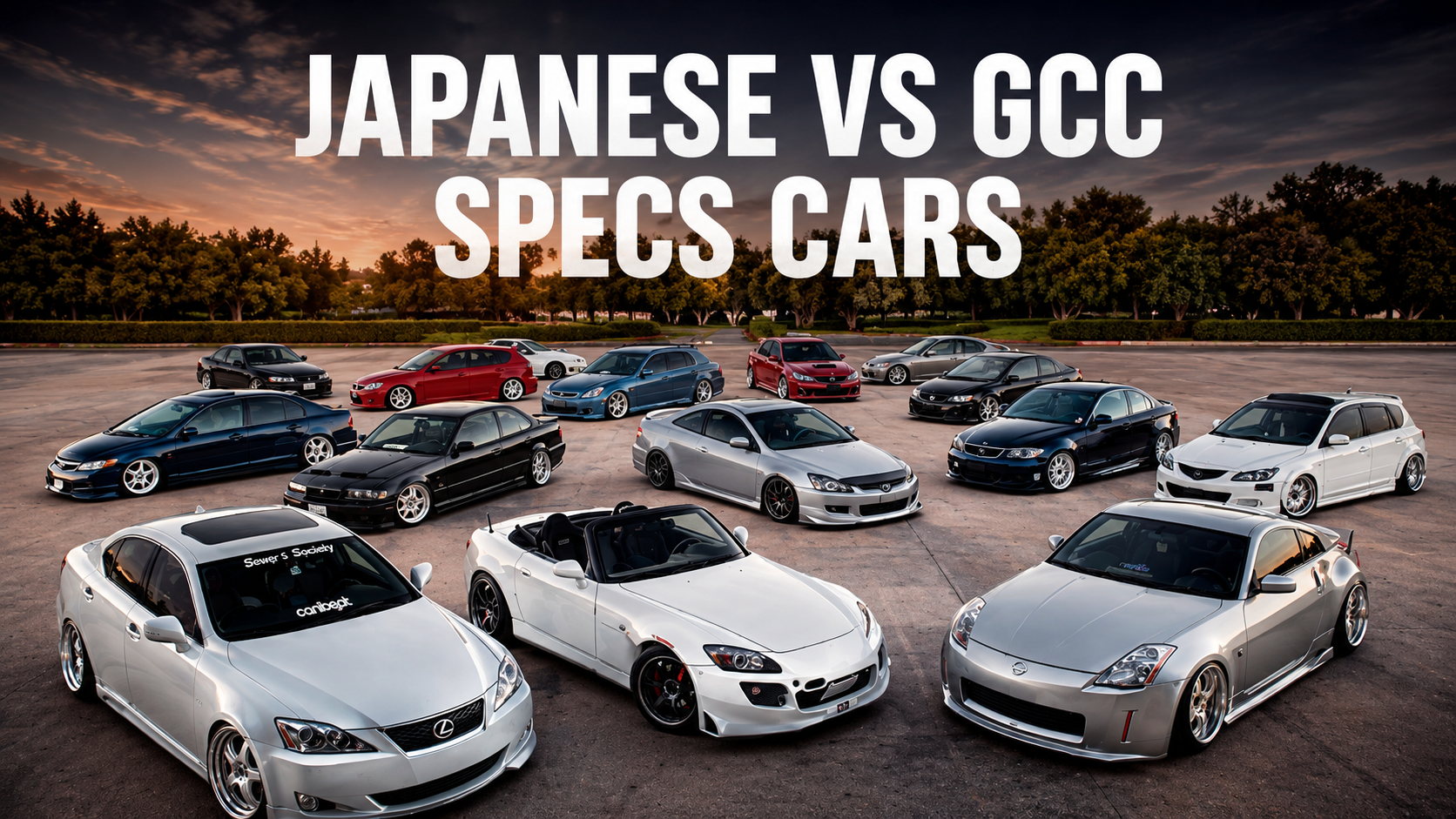
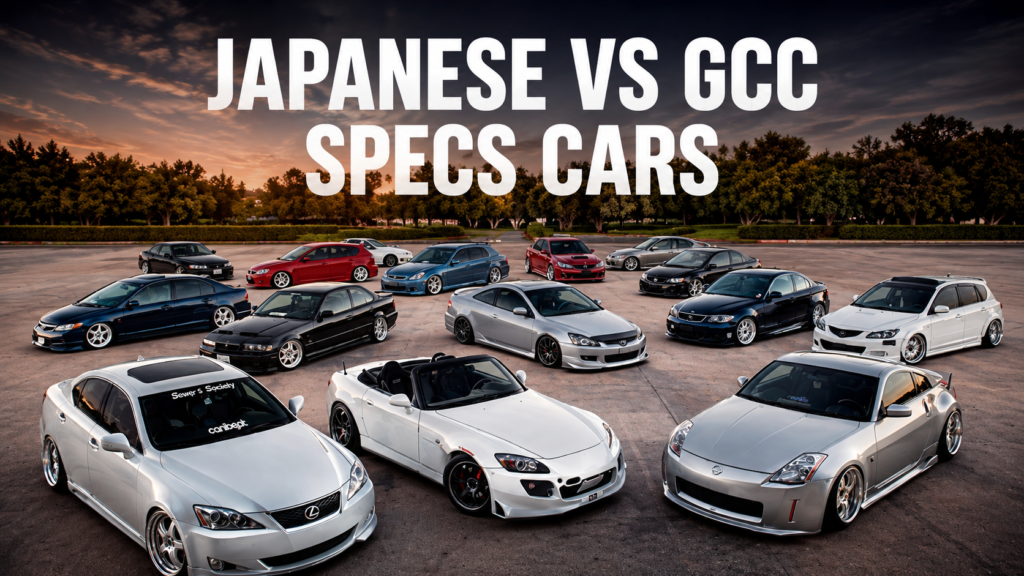
Japanese specifications refer to vehicles originally manufactured for the Japanese domestic market, commonly called JDM vehicles.
These vehicles are built according to Japan’s weather, traffic conditions, and driving preferences. Since Japan generally experiences milder temperatures and different road environments, Japanese-spec cars are configured differently from Gulf-market vehicles.
Many Japanese spec cars in UAE remain popular because they offer:
- Competitive pricing
- Access to unique trims and features
- Wide model selection
- Good overall build quality
However, some imported vehicles may require adaptation for UAE weather.
Japanese Specs vs GCC Specs: Key Differences
Let us look deep into the Japanese specs and their key differences:
Radiator and Engine Cooling System
GCC Specs are built with
- Larger radiator capacity
- Enhanced engine cooling
- Designed for extreme Gulf temperatures
Japanese Specs are strong and that is
- Developed for moderate weather
- Smaller cooling setup
- May need upgrades for UAE summers
Air Conditioning Performance
GCC Specs offer:
- Heavy-duty AC compressors
- Faster cooling inside the cabin
- Built for temperatures above 40°C
Japanese Specs cars are:
- Designed for cooler climates
- Lower cooling output in extreme heat
- Performance may reduce during peak summer
Engine Air Filtration System
GCC Specs offer:
- Advanced dust and sand filtration
- Better engine protection in desert conditions
- Supports longer engine performance
Japanese Specs are with:
- Standard filtration systems
- Less protection from sand and airborne particles
Rust and Corrosion Protection
GCC Specs includes:
- Enhanced anti-rust coating
- Better protection for humid and coastal regions
Japanese Specs:
- Built for different environmental exposure
- Additional rust treatment may be beneficial in UAE conditions
Benefits of GCC Specification Cars in the UAE
Built for Extreme UAE Weather
GCC vehicles are developed to handle Gulf temperatures, helping maintain stable performance and reliability.
Superior-Cooling System
Larger radiators and stronger cooling components improve temperature management.
Powerful Air Conditioning
Cabins cool faster and remain comfortable during summer driving.
Better Dust and Sand Protection
Enhanced filtration helps reduce engine wear from desert conditions.
Improved Durability
Parts and systems are selected to support long-term performance in Gulf climates.
Higher Resale Value
One of the major GCC Vehicle Benefits is stronger market demand and better resale opportunities.
Easier Maintenance and Parts Availability
Local workshops and dealerships typically stock compatible parts and service support.
Better Insurance and Financing Options
GCC vehicles are commonly preferred by insurers and financing providers such as UAE banks. One of the major GCC vehicle benefit are easier loan approval and better insurance acceptance.
Why GCC Cars Are Better Suited for UAE Conditions
For most UAE drivers, GCC vehicles provide a more straightforward ownership experience.
Their advantages include:
- Better compatibility with desert climates
- Stronger cooling efficiency
- Reliable dealership and service support
- Improved long-term ownership value
- Strong resale performance
While imported vehicles can still perform well, GCC models often require fewer adjustments after purchase.
How to Identify a GCC-Spec Vehicle
Check the Vehicle Identification Number (VIN)
Review VIN (Vehicle Identification Number) details to confirm the vehicle’s original destination market.
Inspect the Chassis Plate
GCC vehicles often include regional information and Arabic markings.
Check Side Mirrors and Labels
Look for compliance labels and Arabic text.
Verify Vehicle Documentation
Review the vehicle documentation with checking the Registration history, Service records and Import documentation.
If you are comparing imports, it may also help to explore American Specs in Cars for broader regional comparisons.
Pros and Cons of Japanese-Spec Cars
The pros of Japanese spec cars are
- Competitive pricing
- Large selection of models
- Exclusive Japanese features
Cons are:
- Not fully optimized for UAE climate
- Lower resale demand
- Possible cooling limitations
- Limited dealer support
Pros and Cons of GCC-Spec Cars
The pros of GCC spec cars are:
- Designed for UAE weather
- Stronger AC performance
- Higher resale value
- Easier financing and insurance
- Better long-term reliability
One of the major cons of GCC spec car is it higher upfront purchase cost.
If you are evaluating multiple imports, comparing European specs vs GCC specs cars can also help narrow your decision.
Tips Before Buying a Used Car in UAE
Before purchasing:
- Verify vehicle specifications
- Review complete service history
- Inspect radiator and cooling system
- Check accident records
- Confirm VIN authenticity
- Arrange a professional inspection
If you are exploring used cars in Ras al Khaimah, always prioritise vehicle condition and specification verification.
Why Buy GCC-Spec Used Cars from Auto Nation Used Cars?
Auto Nation Used Cars offers buyers a more confident purchasing experience through providing quality-inspected vehicles, a wide selection of GCC-spec models. The flexible finance solutions and trade-in support are our special offerings. All these features makes as the trusted pre owned cars in Ras Al Khaimah.
Conclusion
Choosing between Japanese and GCC Specs in Cars depends on your priorities and driving environment.
GCC-spec vehicles are built for UAE conditions and typically offer stronger cooling, more effective air conditioning, improved durability, and better resale value. Japanese-spec vehicles can be a cost-effective alternative and provide access to unique models, but they may require additional attention for long-term UAE use.Discover the most popular used Toyota cars in the UAE, from reliable sedans to versatile SUVs, with expert buying advice.
Understanding these differences helps buyers choose a vehicle that delivers comfort, reliability, and better ownership value. For buyers considering Japanese spec cars in UAE, comparing specifications before purchasing can make all the difference.